China’s room spray industry is moving from low-cost contract production toward more controlled, design-led manufacturing. Grand View Research reports continued growth in the global air freshener market, supported by rising home-care spending, hospitality demand, and interest in fragrance-led interiors. Room sprays remain practical. They are compact, quick to use, and easy to customize for bedrooms, hotels, offices, and retail gift sets.
This guide reviews the Top 10 OEM Room Spray Manufacturers in China through a buyer’s lens. The evaluation considers formulation capability, fragrance development, packaging flexibility, production scale, quality systems, export experience, and communication standards. These factors matter more than attractive product photos. A reliable supplier should explain its alcohol or water-based formula, provide sample batches, identify allergen information, and clarify testing procedures before mass production.
Industry data from Euromonitor International also shows how consumers increasingly connect household products with wellness, convenience, and personal identity. That shift creates opportunities for private-label brands, but it also raises expectations. A pleasant scent is not enough. Spray performance, leakage resistance, label accuracy, and batch consistency can determine whether a product earns repeat orders.
The ranking is not absolute. Public factory information can be incomplete, and supplier capabilities may change. Buyers should verify certifications, audit production sites where possible, and test samples under real shipping conditions. A bottle that performs well on a showroom table may fail after weeks in a hot container. This guide offers a practical starting point, not a substitute for due diligence.
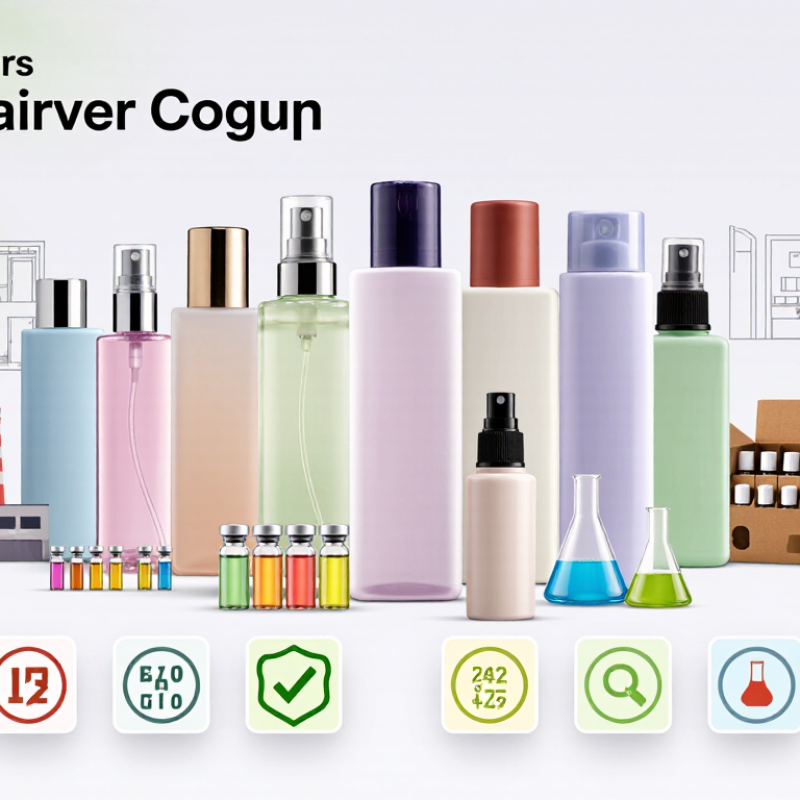
OEM room spray manufacturing in China covers more than filling fragrance into bottles. A capable factory translates a scent brief into a stable, repeatable formula. This work may include fragrance selection, solvent balance, preservative review, and spray performance testing. Specialists check clarity, color, sediment, and nozzle output under different temperatures. A sample can smell excellent on day one, then change after storage. That detail matters.
Customization usually extends to bottle shape, cap style, label material, carton artwork, and liquid volume. Production teams prepare prototypes, revise dimensions, and confirm artwork before mass filling. They should also provide batch records, ingredient information, safety documents, and applicable market compliance support. Independent testing may examine flammability, leakage, compatibility, and microbial risk when relevant. Requirements differ by destination, so vague promises deserve caution. Documentation is part of the product.
Reliable OEM service includes incoming-material inspection, in-process checks, final sampling, and lot traceability. Operators should verify fill weight, closure strength, print alignment, and carton count. Minimum order quantities, lead times, tooling fees, and storage conditions need written approval. The process is not flawless. Fragrance preferences can shift during review, and packaging samples may expose hidden costs. A practical manufacturer records these changes instead of hiding them. Buyers gain more control when they request a pilot run, retain approved samples, and inspect production evidence before shipment.
Evaluating China’s top OEM room spray manufacturers requires more than comparing quoted prices. Start with factory evidence: production photos, audit records, batch traceability, and current quality certificates. Ask who blends, fills, labels, and inspects each order. A reliable supplier explains its process without vague promises. Visit if possible. Video calls help, but they do not replace an independent audit. That lesson is easy to overlook.
Request three pilot samples from the same brief. Compare scent strength, spray pattern, drying time, and leakage after transport simulation. Check whether the bottle, pump, cap, and label survive heat and cold exposure. Professional teams should provide ingredient documentation, safety data, allergen information, and market-specific labeling support. Confirm that fragrance materials meet applicable standards in your sales markets. Do not accept a certificate with no matching product or date. Small paperwork gaps can cause expensive delays.
Review minimum order quantities, tooling fees, lead times, payment terms, and replacement policies in writing. Ask for retained samples and batch records after production. Factory capacity matters, but communication matters more when a formula changes. Speak with recent customers where possible, while protecting their confidentiality. One weakness may remain: a beautiful sample can hide inconsistent scaling. Approve a pre-production batch, inspect finished cartons, and test random units. Judge evidence, not polished presentations. A good manufacturer welcomes difficult questions and records corrective actions.
The table below is an anonymous supplier-screening matrix based on practical OEM room spray evaluation criteria. Numerical values are indicative industry benchmarks for initial comparison and should be verified through quotations, factory audits, current certificates, product samples, and compliance documents before supplier selection.
| Rank | Anonymous Supplier Profile | Screening Score (100) |
Typical MOQ per SKU |
Sample Lead Time | Bulk Production Lead Time | Common Fill Sizes | Packaging Development Capability | Compliance Documentation to Request | Quality-System Evidence | Key Evaluation Advantage | Main Verification Risk |
|---|---|---|---|---|---|---|---|---|---|---|---|
| 1 | Profile 01 High compliance focus |
92 | 1,000–3,000 units | 7–12 working days | 25–40 working days | 50–100 ml; 150–200 ml | Custom bottle, actuator, label, carton, and fragrance matching | IFRA certificate, SDS, allergen declaration, ingredient disclosure, stability data, transport classification | ISO 9001 or equivalent documented quality procedures; batch traceability | Strong documentation and structured approval process | Confirm that certificates apply to the exact fragrance formula and finished product |
| 2 | Profile 02 Flexible customization |
90 | 1,500–5,000 units | 8–14 working days | 30–45 working days | 30–100 ml; 120–250 ml | Private-label artwork, fragrance adjustments, and multiple closure options | IFRA conformity, SDS, COA, packaging specifications, microbial or preservative data where applicable | Incoming material inspection, in-process checks, and finished-product release records | Suitable for brands requiring several scent and packaging variations | Small changes in fragrance or packaging may reset the approval timeline |
| 3 | Profile 03 Export-oriented production |
89 | 2,000–5,000 units | 10–15 working days | 30–50 working days | 50 ml; 100 ml; 150 ml | Export cartons, multilingual labels, barcode placement, and palletization support | SDS in destination-market language, transport classification, REACH-related information where applicable, product specification | Documented lot coding, final inspection, and carton drop-test records | Better suited to international shipping and multi-market labeling | Check country-specific requirements for flammable or alcohol-containing products |
| 4 | Profile 04 Low-MOQ development |
87 | 500–2,000 units | 5–10 working days | 20–35 working days | 30–100 ml | Stock packaging with optional label and carton customization | Fragrance conformity statement, SDS, COA, packaging material declaration | Basic batch records and pre-shipment inspection process | Lower entry quantity for testing new concepts or sales channels | Stock components may limit exclusivity and long-term supply consistency |
| 5 | Profile 05 Premium fragrance development |
86 | 2,000–5,000 units | 10–20 working days | 35–55 working days | 50–100 ml; 100–200 ml | Fragrance briefing, scent modification, premium decoration, and gift-set packaging | IFRA certificate, allergen list, SDS, stability data, compatibility test, finished-product specification | Fragrance retention samples and documented formula-change control | Useful for differentiated scent profiles and premium positioning | Longer development time and higher testing cost may apply |
| 6 | Profile 06 Fast replenishment |
84 | 3,000–10,000 units | 5–10 working days | 15–30 working days | 50 ml; 100 ml; 150 ml | Standardized components and repeat-order packaging support | SDS, COA, batch specification, packaging inspection report, shipping carton details | Production planning records and documented final inspection | Shorter replenishment cycle for established, repeatable SKUs | Less suitable for highly complex or frequently changing packaging |
| 7 | Profile 07 Packaging integration |
83 | 2,000–6,000 units | 8–15 working days | 30–45 working days | 50–100 ml; 200 ml | Coordinated sourcing of bottles, pumps, caps, labels, cartons, and inserts | Material safety declarations, packaging specifications, SDS, COA, compatibility results | Component inspection standards and packaging-line quality records | Reduces coordination among separate packaging vendors | Verify ownership, tooling terms, and replacement policy for custom components |
| 8 | Profile 08 Sustainable-material option |
81 | 2,000–5,000 units | 10–18 working days | 35–50 working days | 50–100 ml; 150 ml | Recycled-content, recyclable, lightweight, or reduced-plastic packaging options | Material composition statement, recycled-content evidence where claimed, SDS, COA, packaging specification | Supplier declarations, incoming material checks, and change-control records | Supports packaging sustainability claims when evidence is available | Environmental claims must be checked against actual material and market rules |
| 9 | Profile 09 Online-brand launch support |
79 | 500–3,000 units | 7–14 working days | 25–40 working days | 30–100 ml | Ready-to-use packaging sets, label application, product photography samples, and small-batch support | SDS, COA, fragrance documentation, label proof, finished-product specification | Sample approval records and pre-shipment inspection available on request | Practical for small launches and demand testing | Confirm production capacity before scaling successful products |
| 10 | Profile 10 Cost-efficient standard range |
77 | 3,000–10,000 units | 7–12 working days | 20–35 working days | 50 ml; 100 ml; 150 ml | Standard bottle and closure combinations with limited decoration choices | SDS, COA, product specification, packaging specification, batch information | Basic inspection checklist and production batch records | Competitive for straightforward, high-volume standard products | Confirm consistency of fragrance, spray performance, leakage resistance, and labeling |
China’s top 10 OEM room spray manufacturers typically support private-label projects from concept to finished shipment. Their capabilities may include fragrance development, formula adjustment, filling, crimping, labeling, and carton packing. Experienced suppliers can work with alcohol-based, water-based, and low-odor formulations, depending on the product brief and market requirements. Small details matter. Spray consistency, valve performance, and drying time can affect customer experience.
Customization often begins with fragrance selection. Buyers may request floral, woody, citrus, herbal, or seasonal profiles. Professional manufacturers usually provide sample rounds before mass production. They can also adjust bottle size, nozzle style, label material, color, and outer packaging. Some factories offer molded bottles or specialty finishes, but these options may require higher minimum orders and longer development schedules. Clear specifications reduce avoidable revisions.
Reliable production requires more than attractive packaging. Buyers should review batch records, raw material documentation, stability testing, and quality inspection procedures. A capable factory can explain its production flow and identify practical risks early. Yet no supplier is perfect. Fragrance perception can change after storage, and printed colors may vary slightly between batches. Realistic testing is essential. Requesting pilot samples, checking leakage, and confirming shipping conditions can prevent costly surprises. Manufacturers with export experience should also provide accurate documentation for the destination market, while respecting applicable safety and labeling rules.
Top 10 OEM Room Spray Manufacturers in China: Quality Standards, Certifications, and Production Compliance
When evaluating the top 10 OEM room spray manufacturers in China, certification records deserve close attention. A reliable factory should maintain ISO 9001 procedures and documented quality controls. For fragrance safety, suppliers should provide IFRA certificates, Safety Data Sheets, and allergen declarations. Export markets may also require REACH, CLP, or other local compliance documents. Check whether these documents match the exact formula, not a similar product.
Production compliance must appear on the factory floor. Look for clean filling areas, calibrated weighing scales, sealed storage tanks, and batch-coded bottles. Strong manufacturers keep records for raw material lots, filling temperatures, leakage tests, and final inspections. Stability testing should examine scent changes, color, spray performance, and bottle compatibility. Some factories claim complete testing, but their reports may lack dates or sample details. That deserves careful questioning.
Tips: Request a recent batch record and a factory audit video. Confirm who performs laboratory testing. Ask for retained samples from production. Check whether the same formula passes tests after packaging changes. A small pilot order can reveal weak labeling, uneven spray output, or poor carton protection. Do not judge compliance by certificates alone. Documentation can be tidy while daily controls remain inconsistent. That gap is easy to miss.
Top 10 OEM Room Spray Manufacturers in China
When comparing China’s top OEM room spray manufacturers, price is only the opening figure. For a 100 ml spray, indicative factory quotes often range from $0.80 to $2.80 per unit. Packaging changes everything. Glass bottles, custom molds, printed cartons, and water-based formulas can raise the landed cost quickly. Ask whether fragrance development, filling, labeling, and export cartons are included. Some quotes look attractive because testing and tooling appear later.
Minimum order quantities usually fall between 500 and 3,000 units per fragrance. Lower MOQs may require standard bottles or shared production schedules. That trade-off matters for new retailers testing two or three scents. Request a written sample policy. Clarify sample fees, revision limits, lead times, and the deposit schedule before approval. Production commonly takes 20 to 45 days after artwork and payment confirmation. Delays still happen. Holiday shutdowns, fragrance shortages, or artwork errors can disrupt a launch. Manufacturers offering pre-shipment inspection provide stronger control, although inspection is not a guarantee.
Export support separates a factory from a dependable supply partner. Check experience with commercial invoices, packing lists, HS classification, and destination-country labeling. Ask about sea, air, and rail options, carton dimensions, pallet loading, and insurance. Reliable teams should explain Incoterms clearly and answer compliance questions with documents. Avoid promises without evidence. Compare three written quotations using the same bottle, formula, carton, destination, and order volume. That method reveals the real price, not merely the cheapest headline. Even careful comparisons can miss hidden rework costs.
This benchmark compares anonymized supplier profiles using common private-label room spray purchasing factors. FOB pricing refers to a standard 100 ml room spray order, MOQ is shown in units, and export service is scored from 1 to 5 based on documentation, packaging support, and international shipping capability.
Indicative market benchmark ranges for OEM sourcing; final quotations vary by fragrance formula, packaging, certification, order volume, and destination market.
Request quality certificates, fragrance safety documents, safety data sheets, and allergen declarations. Check that each document matches the exact formula. Similar formulas are not enough.
Look for clean filling areas, calibrated scales, sealed tanks, and batch-coded bottles. Small details matter.
Ask for batch records, raw material lot numbers, filling temperatures, leakage tests, and final inspection results. Request retained samples from production.
Testing should examine scent, color, spray performance, and bottle compatibility. Reports should include dates and sample details. Undated reports deserve questions.
Indicative factory pricing often ranges from $0.80 to $2.80 per unit. Glass bottles, custom molds, cartons, and special formulas can increase costs quickly.
Minimum orders commonly range from 500 to 3,000 units per fragrance. Lower quantities may require standard bottles or shared production schedules.
Production commonly takes 20 to 45 days after artwork and payment confirmation. Fragrance shortages, holiday closures, and artwork errors may cause delays.
Use the same bottle, formula, carton, destination, and order volume. Ask whether testing, tooling, labeling, and export cartons are included. The cheapest headline price can mislead.
China’s OEM room spray manufacturing industry offers a complete path from product concept to finished goods, including fragrance development, formula adjustment, bottle and packaging selection, filling, labeling, and quality inspection. When evaluating a reliable OEM Room Spray Manufacturer, buyers should consider production experience, formulation expertise, customization flexibility, communication efficiency, and the ability to support different market requirements. A capable manufacturer can provide tailored scent profiles, packaging designs, bottle formats, label options, and production volumes while maintaining consistent product quality.
Quality standards and production compliance are also essential. Buyers should review available certifications, material traceability, testing procedures, facility management, and export documentation before placing an order. Pricing should be compared together with minimum order quantities, sampling costs, lead times, packaging fees, and shipping support rather than judged by unit price alone. By assessing manufacturing capabilities, compliance systems, customization services, and export experience, businesses can select a suitable Chinese supplier for stable, cost-effective, and scalable room spray production.