Finding reliable OEM Home Fragrance Manufacturing in 2026 requires more than comparing factory prices. Brands must examine product quality, formulation expertise, communication, and supply reliability. A polished website proves very little.
The search should begin with a clear product brief. Define the fragrance type, vessel size, wax or base material, burn time, packaging, and target market. Then request samples from experienced manufacturers. Test each candle in a real room, not only under showroom lighting. Notice the scent throw, soot, wick stability, label adhesion, and cooling marks. Small details matter.
A credible supplier should explain its development process clearly. Ask about fragrance documentation, batch testing, production capacity, quality controls, and ethical sourcing. Confirm that materials and labels meet the regulations of every intended market. Independent testing may add cost, but it can prevent expensive recalls and damaged trust. Factory audits, traceable samples, and written specifications also support dependable decisions. Experience helps here, although it can create bias.
Do not choose the cheapest quotation too quickly. Low pricing may hide weak packaging, inconsistent fragrance loading, or unrealistic lead times. A supplier that answers difficult questions directly is often more valuable than one offering perfect promises. No checklist is perfect. Even a successful sample may not represent large-scale production. Build inspection points into the agreement, review pilot batches carefully, and keep communication documented. This guide explores practical ways to identify, evaluate, and work with an OEM partner that can support safe, consistent, and commercially realistic home fragrance products in 2026.
Define Your OEM Home Fragrance Product Requirements for 2026
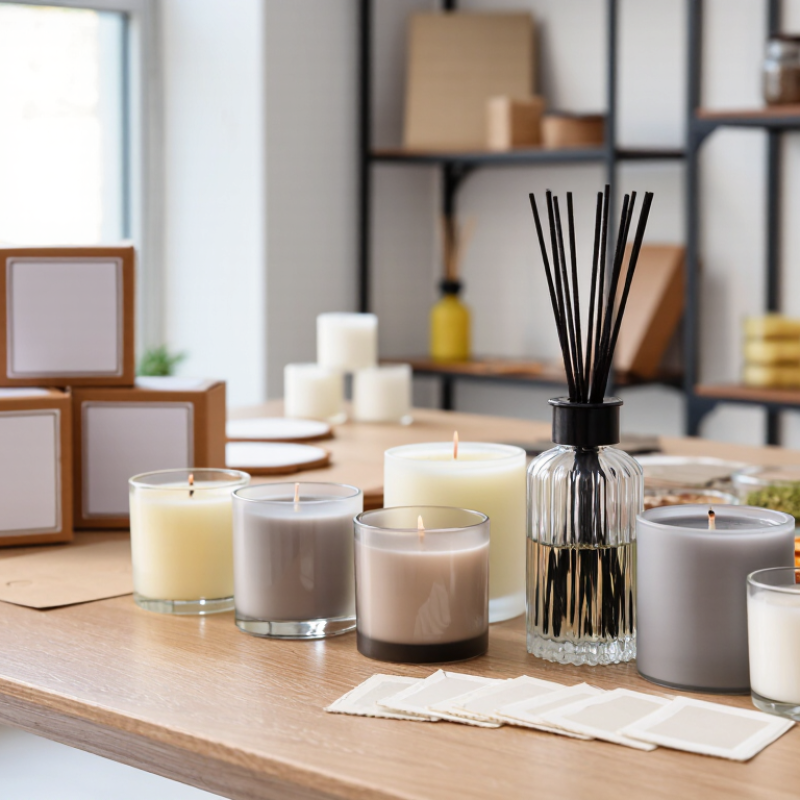
Defining your OEM home fragrance requirements should begin with the product experience, not the supplier list. Decide whether you need candles, reed diffusers, room sprays, wax melts, or several formats. Describe the desired scent clearly, such as dry cedar, soft amber, or fresh citrus. Include fragrance strength, burn time, diffusion area, color, texture, and expected shelf life. Vague descriptions create expensive revisions later.
Your 2026 brief should also specify packaging dimensions, materials, closure types, labeling space, and target retail price. Ask manufacturers for fragrance documentation, safety testing, stability data, and batch traceability. These records help verify product consistency and support responsible market entry. Confirm minimum order quantities, sample fees, production capacity, inspection procedures, and lead times in writing. Small details matter.
Think about sustainability, but define it carefully. Recycled glass may increase weight and shipping costs. A lighter package may reduce transport impact, yet feel less premium. There is no perfect answer. Leave room for testing. A fragrance can smell elegant on a blotter but become flat after several weeks in a closed room. Request multiple samples, test them in realistic spaces, and record changes in temperature, scent throw, and appearance. Your requirements should be specific enough to guide production, but flexible enough to improve after evidence.
Research Qualified Home Fragrance Manufacturers and Production Regions
Finding OEM home fragrance manufacturing in 2026 requires more than comparing unit prices. Manufacturers should be evaluated by formula control, testing capacity, and production transparency. Grand View Research valued the global home fragrance market at approximately USD 13.1 billion in 2023. It also forecast continued growth through 2030. These figures show demand, but market definitions differ between reports. Treat forecasts as direction, not certainty.
Production regions offer different advantages. China provides mature supply chains for glass, ceramics, packaging, and filling equipment. India offers strong access to essential oils and botanical materials, although consistency may vary between suppliers. Poland, Turkey, and other European regions can support shorter regional distribution and stricter documentation. Ask each factory for ISO 9001 records, batch samples, safety data sheets, and fragrance compliance documents. IFRA Standards are useful references for responsible fragrance formulation. Do not accept a certificate without checking its scope.
Tips: Request three pilot batches. Compare scent strength after four weeks. Test wick behavior, leakage, label accuracy, and carton compression. Audit the actual production site, not only the trading office. A low quote can hide expensive quality problems. I have seen sourcing plans overvalue factory size and undervalue communication speed. That is a weakness worth admitting. A smaller manufacturer may respond better, but it may lack backup equipment. Your assessment should balance capability, evidence, and realistic production risk.
Evaluate Certifications, Formulas, Materials, and Factory Capabilities
How to Find OEM Home Fragrance Manufacturing in 2026?
Choosing an OEM home fragrance manufacturer requires more than comparing prices. I recommend requesting current certificates, test reports, and factory audit records before discussing large orders. Check each document’s scope, issue date, and covered production site. Safety documentation should match the exact fragrance formula, packaging, and intended market. A certificate alone proves little.
Review the formula with a qualified technical team. Ask about fragrance concentration, allergen disclosure, stability testing, and batch-to-batch consistency. For candles, inspect burn testing, wick selection, wax performance, and vessel safety. For reed diffusers, check liquid compatibility, evaporation rate, and leakage resistance. Materials need equal attention. Test glass, caps, reeds, labels, cartons, and internal coatings together. A beautiful package can still fail during transport.
Visit the factory if possible. Observe calibrated scales, clean filling areas, controlled storage, and clear batch records. Confirm its minimum order quantity, pilot-run process, daily capacity, quality checkpoints, and handling of rejected goods. Traceability matters when a defect appears months later. Ask whether samples are retained for every batch. I once trusted a strong sample too quickly; production consistency later became the harder question. A small trial order can expose weak controls before they become expensive. Factory photos help, but direct evidence is better.
Compare Samples, Minimum Orders, Costs, Timelines, and Quality Controls
How to Find OEM Home Fragrance Manufacturing in 2026?
The global home fragrance market reached about USD 13.4 billion in 2023, according to Grand View Research. Growth increases supplier competition, but comparison still requires discipline. Request identical samples, including wax type, fragrance load, vessel size, wick, and packaging. Test cold scent, hot throw, burn behavior, leakage, and surface appearance under controlled conditions. A sample can look excellent and still perform poorly after transport.
Minimum orders often vary by fragrance, container, label, and carton configuration. Ask for separate MOQs for each component. Compare the full landed cost, not only the unit quotation. Include tooling, testing, filling, cartons, freight, duties, and rejected units. Small orders may carry higher prices, yet they reduce inventory risk. That trade-off deserves calculation. A common sourcing mistake is accepting a low MOQ without checking production consistency.
Request a written timeline covering sampling, formula approval, packaging procurement, production, inspection, and shipment. Eight to twelve weeks may be realistic for customized products, but imported components can extend it. Quality controls should reference measurable standards. ISO 22716 offers useful GMP guidance for controlled production, while IFRA fragrance standards support responsible fragrance-use evaluation. Require batch records, weight checks, leak tests, burn tests, and retained samples. Consider independent inspection before shipment. It costs money. Skipping it can cost more. Reports provide direction, not certainty; factory evidence should decide.
How to Find OEM Home Fragrance Manufacturing in 2026? - Compare Samples, Minimum Orders, Costs, Timelines, and Quality Controls
| OEM Product Category |
Typical Specification |
Sample Quantity and Lead Time |
Typical MOQ |
Indicative Unit Cost
(USD, EXW) |
Bulk Production Timeline |
Typical Quality Controls |
| Stock-Scent Container Candle |
180–220 g wax fill; glass or tin vessel; standard label |
1–3 units; approximately 3–8 business days |
300–500 units per scent and SKU |
$2.20–$4.80 |
25–45 business days after artwork and materials approval |
Incoming wax, fragrance, vessel, and wick inspection; fill-weight check; wick-centering check; visual inspection; burn-test sampling; label and packaging review |
| Custom-Formula Container Candle |
180–300 g wax fill; custom fragrance brief; custom vessel or decoration |
2–6 development units; approximately 10–20 business days |
1,000–3,000 units per fragrance and SKU |
$3.50–$8.50 |
45–75 business days, including fragrance and packaging approval |
Fragrance documentation review; wax and fragrance compatibility testing; wick-selection trials; burn profile testing; adhesion and frosting checks; batch coding; final AQL-based inspection |
| Stock-Scent Reed Diffuser |
100–150 ml liquid; glass bottle; fiber or rattan reeds; standard cap |
1–3 units; approximately 5–10 business days |
500–1,000 units per scent and SKU |
$2.80–$6.50 |
30–50 business days after packaging confirmation |
Liquid appearance and odor check; fill-volume verification; leak and cap-torque testing; reed absorption and evaporation observation; bottle and decoration inspection; packaging drop-test sampling |
| Custom-Formula Reed Diffuser |
100–200 ml liquid; custom fragrance; custom bottle, cap, and carton |
2–5 development units; approximately 10–20 business days |
1,000–3,000 units per fragrance and SKU |
$4.50–$9.50 |
45–75 business days, depending on custom components |
Formula stability review; fragrance and base compatibility testing; evaporation-rate comparison; leak testing; closure compatibility testing; safety-document and label review; finished-goods sampling inspection |
| Room and Linen Spray |
100 ml trigger or fine-mist bottle; water- or solvent-based formula |
2–5 units; approximately 7–15 business days |
1,000–3,000 units per scent and SKU |
$1.80–$4.50 |
30–60 business days after formula and packaging approval |
Appearance and odor check; spray-pattern and actuator testing; fill-volume check; leakage and closure testing; compatibility testing with bottle and dip tube; label, SDS, and transport documentation review where applicable |
| Wax Melts |
60–100 g wax fill; clamshell or paperboard pack; multiple fragrance options |
3–8 units; approximately 5–12 business days |
500–1,000 units per scent and SKU |
$1.20–$3.00 |
25–45 business days after artwork approval |
Wax and fragrance inspection; cavity-weight verification; surface and color inspection; melt-performance testing; fragrance-load consistency check; packaging fit and barcode verification |
| Multi-Item Gift Set |
Usually 2–4 items, such as a candle, diffuser, spray, or wax melts |
1–3 assembled sets; approximately 12–25 business days |
1,000–3,000 sets, depending on component MOQs |
$8.00–$18.00 |
60–90 business days, including component sourcing and assembly |
Component-level inspection; fragrance and color consistency checks; assembly-line checklist; accessory count verification; carton compression and drop-test sampling; final visual and functional inspection |
Planning note: These are indicative 2026 OEM benchmark ranges for standard commercial quantities. Actual pricing and timing vary by formulation, fragrance concentration, vessel, decoration, packaging, regulatory requirements, order volume, and destination. Unit costs generally exclude freight, duties, taxes, tooling, mold charges, artwork, testing fees, and certification costs. MOQ is normally calculated per SKU and fragrance unless the manufacturer confirms mixed-SKU production.
Finalize Contracts, Compliance Checks, Packaging, and Launch Planning
Finding an OEM home fragrance manufacturer in 2026 requires more than comparing unit prices. A clear contract should define formulas, fragrance ownership, minimum order quantities, lead times, inspection rights, and rejected-goods procedures. Record every approved sample, including its scent strength, color, texture, and filling weight. Small differences become expensive after mass production.
Compliance checks should begin before the deposit is paid. Request ingredient documentation, safety data, allergen information, batch records, and facility certifications. Confirm that labels match the destination market’s rules for ingredients, warnings, net contents, and responsible-party details. Do not rely on verbal promises. Ask for current documents. Check them against the final formula and packaging copy. This step is often rushed, and that is a costly mistake.
Packaging needs practical testing, not only attractive artwork. Test leakage, heat exposure, carton compression, cap security, and transit vibration. A beautiful box can still fail in a humid warehouse. Confirm color proofs and barcode readability before approval. Launch planning should connect production dates with photography, inventory storage, customs clearance, and retailer delivery windows. Keep a small buffer for fragrance adjustments or delayed components. It may feel inefficient, but missed launch dates usually cost more. Review the plan with the manufacturer weekly, and write down every change. An overlooked email can become a serious dispute.
How to Find OEM Home Fragrance Manufacturing in 2026?
Typical planning duration by contract, compliance, packaging, and launch stage
The chart shows typical calendar-time ranges for a new OEM home fragrance project. Packaging development and production usually require the most time, while contract finalization can often be completed within one to two weeks. Compliance checks should cover applicable fragrance, labeling, transport, and product-safety requirements. Several stages can overlap after the product specification is approved.
FAQS
Request current certificates, test reports, safety data, allergen information, and factory audit records. Check issue dates, document scope, and the exact production site. A certificate alone proves little.
Ask about fragrance concentration, allergen disclosure, stability testing, and batch consistency. The documents should match the final formula and intended market. Do not rely on verbal promises.
Candles need burn tests, suitable wicks, wax checks, and vessel safety testing. Reed diffusers need evaporation, liquid compatibility, and leakage tests. Small failures can become expensive.
Test glass, caps, reeds, labels, cartons, and internal coatings together. Check leakage, heat exposure, compression, cap security, and transit vibration. A beautiful package can still fail.
Look for calibrated scales, clean filling areas, controlled storage, and clear batch records. Ask about minimum order quantities, pilot runs, capacity, and quality checkpoints. Factory photos are not enough.
Traceability helps identify problems months after production. Ask whether samples are retained for every batch. Record scent, color, texture, and filling weight.
Define formulas, fragrance ownership, order quantities, lead times, inspection rights, and rejected-goods procedures. Attach every approved sample to the contract. Unclear wording invites disputes.
Connect production dates with photography, storage, customs clearance, and delivery windows. Keep a small buffer for formula adjustments and delayed components. Review changes weekly in writing. I once trusted a strong sample too quickly.
Conclusion
Finding reliable OEM Home Fragrance Manufacturing in 2026 requires a clear, structured approach from product concept to market launch. Begin by defining your fragrance format, scent profile, target audience, packaging style, quantity, and performance expectations. Then research qualified manufacturers and suitable production regions, considering their experience, communication, capacity, and ability to support your product category. Review certifications, ingredient sourcing, formulation expertise, material safety, testing procedures, and factory capabilities before moving forward.
Request samples to assess fragrance quality, appearance, packaging compatibility, and consistency. Compare minimum order quantities, pricing, lead times, payment terms, and quality-control systems to identify the best overall value rather than focusing only on cost. Before production, finalize contracts, specifications, intellectual property protection, compliance documentation, labeling requirements, packaging details, inspection procedures, and corrective-action processes. A detailed launch plan should also include pilot production, shipment scheduling, inventory preparation, and ongoing supplier communication, helping reduce risks and build a dependable long-term manufacturing partnership.